
UK e-invoicing is coming in 2029 – What This Means For Your Business
As a part of the 2025 Budget, the government confirmed that mandatory e-invoicing will be introduced for Value Added Tax (VAT) invoices from 2029.
From 1st April 2029, VAT-registered businesses will be required to issue invoices in a structured machine-readable format rather than traditional invoicing or PDFs.
At Cheylesmore Chartered Accountants, we’re already preparing our clients for this change to ensure minimal disruption to their systems and processes.
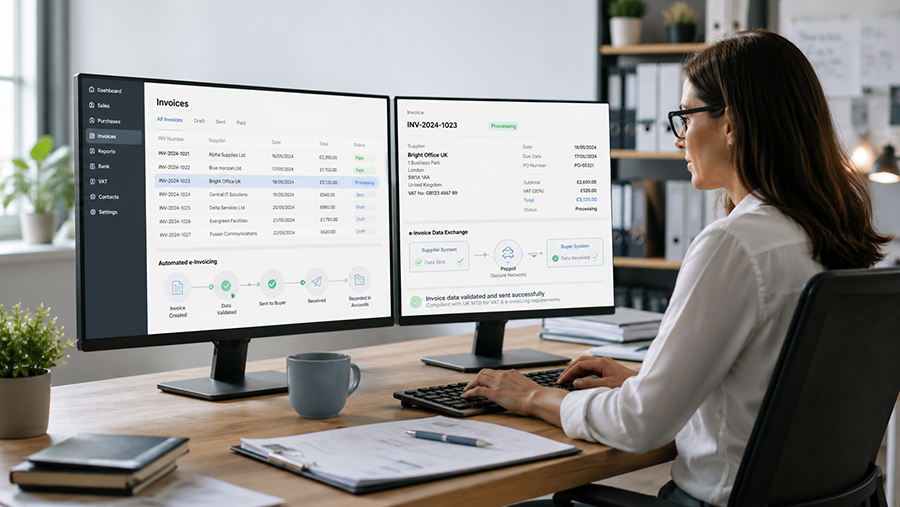
What is Changing?
Most businesses typically invoice using:
PDFs generated from an accounting software
Word or Excel templates
Manual invoices
From 2029, invoices will need to be:
Machine-readable
Structured
Exchanged directly between systems
This means invoice data will flow directly onto your customer’s accounting software, removing the requirement for manual entry.
Common Misconception
PDF’s will no longer be enough and will not classify as an e-invoice. Whilst they are currently accepted, they will not meet the April 2029 requirements. This new process focuses on structured data that a software can read automatically not just a digital document.
Why is HMRC Implementing this?
The release of the 2025 budget introduced a number of changes aimed at modernising the UK tax system in hopes to help the operations of businesses. The biggest factors:
Reducing errors and reducing the VAT gap
Improve accuracy in reporting
Reduction of late payments – which they aim to reduce by 20% with e-invoicing (Source: GOV.UK - Electronic Invoicing)
Does This Affect My Business?
If you’re a VAT-registered business issuing invoices to other businesses or government organisations, you are likely to be within the scope.
If your business handles individual customers, it is less likely to impact you initially however, as this implements from April 2029, suppliers and customers will adapt.
How Can I Prepare My Business For this?
Planning ahead now, rather than reacting closer to the deadline, will ensure the transition is much smoother and avoid potential disruption to your business.
One of the most important steps is making sure your data is accurate. From VAT numbers, customer and supplier details to invoice fields, consistency is key.
A review of your software and internal processes will ensure not only are you prepared for the change, but your system is also compliant too.
Prevent last-minute issues by staying ahead of the changes and planning now.
As accountants in Coventry, we’re already working with our clients with the practical and technical terms to ensure their business operations stay complaint. Our focus is on making sure your business is prepared for compliance changes and effects to daily operations.
If you’d like to understand how e-invoicing will impact your business, book a free consultation with our team to explore the next steps whilst staying compliant.