
Why Inaccurate Filings Are Now a Major Risk for UK Limited Companies (2026 Update)
Over the last 12 to 18 months, the UK compliance landscape has changed significantly. Filing incorrect information is no longer a minor issue that can be quietly corrected later.
Inaccurate filings now carry real financial, legal and reputational risks for limited companies, as Companies House reforms and HMRC compliance rules are being enforced far more strictly than in previous years. What was considered a minor mistake can now quickly turn into a compliance issue.
As experienced accountants in Coventry, we have seen more businesses caught out by what would previously have been considered small mistakes. However, under current legislation, those mistakes can now lead to penalties, rejected filings or further investigation.
What Constitutes as an Inaccurate Filing?
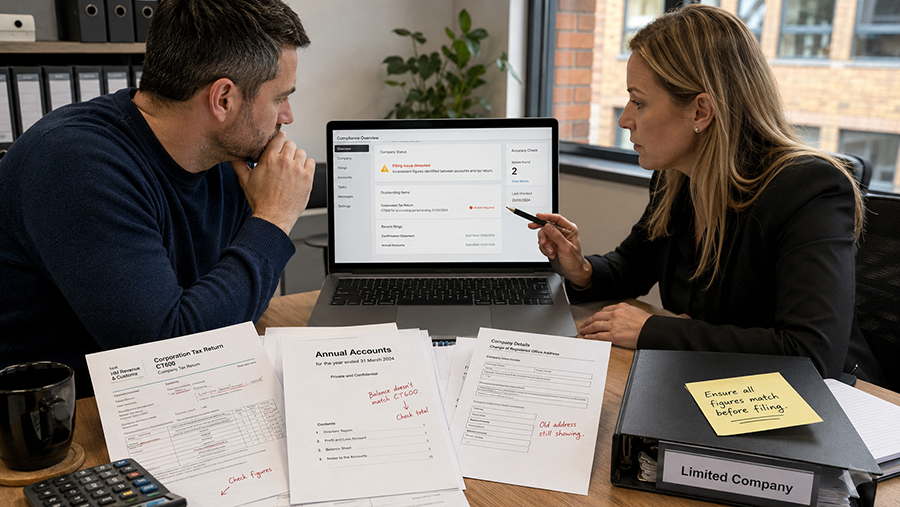
An inaccurate filing is any submission to HMRC or Companies House that contains incorrect figures, missing information, or inconsistent data.
Common examples are:
Incorrect accounts submitted
Errors or missing information within your Corporation Tax Return (CT600)
Failing to update director or shareholder details
Differences between financial records and submitted filings
Under UK law, directors are legally responsible for ensuring all filings are accurate and up to date.
Why this matters more in 2026?
The main driver behind this shift is the Economic Crime and Corporate Transparency Act 2023 (ECCTA).
Previously, Companies House largely accepted filings at face value. Today, it operates much more like a regulator, with the power to:
Query and reject filings
Request additional supporting information
Remove incorrect or misleading data from the register
These changes were designed to improve transparency and avoid misuse of company structures.
Penalties for inaccurate filings
Companies House now has authority to issue financial penalties directly for non-compliance which can include:
Fixed or daily penalties
Can reach up to £10,000 depending on the severity of the offence
Companies House can also reject filings until errors are corrected and initiate director disqualification proceedings.
Penalties for inaccurate returns
HMRC can apply penalties if your return contains inaccurate information that understates tax or overclaim reliefs.
The level of penalty depends on behaviour which ranges from no penalty where reasonable care is taken, to significant financial penalties where errors are careless or deliberate.
Common causes of inaccurate filings
As an experienced team of accountants we have noticed, most inaccuracies stem from:
·Poor record keeping: HMRC advises businesses to keep records for up to 6 years. Missing invoices or incomplete data can lead to incorrect VAT treatment and inaccurate accounts.
Outdated Processes: Cloud accounting software significantly reduces the risk of errors. Manual spreadsheets are still one of the most common causes of miscalculations.
Lack of review: Not reviewing your accounts or having an experienced accountant results in unreconciled balances, missed adjustments and incorrect tax calculations.
How to Avoid inaccurate filings
For most businesses, avoiding inaccurate filings comes down to having the right processes in place:
Consistent records: Keep up to date records that are reconciled and reviewed on a quarterly basis
Review filings carefully: A final review of figures helps prevent small errors from being overlooked
Seek professional advice: Working with an experienced accountant reduces the risk of tax mistakes in a growing business
For many businesses, inaccurate filings aren’t intentional. They are usually the result of time pressure or limited internal knowledge. With increased compliance checks now in place, it’s more important than ever to address these risks early.
We understand how demanding it can be to manage a growing business. By working with the right support, you can focus on running your business while ensuring your accounts remain accurate and compliant.
Accuracy is a core aspect of compliance and not an afterthought, but it doesn’t have to be your daily nag. At Cheylesmore Chartered Accountants we pride ourselves on accounts that are compliant in time with your deadlines.
If you’re concerned about inaccurate filings or would like a second review of your accounts, get in touch with Cheylesmore Chartered Accountants today. We support businesses across Coventry with tax, compliance and ongoing financial support, helping you stay accurate, compliant and in control.